Steph Davis is one of the world's leading rock climbers, a BASE jumper and a wingsuit flyer. She was the first woman to summit all the peaks of the Fitzroy Range in Patagonia, among other amazing exploits in her career.
Finally, you can watch this short video about cragging in Rodellar on Jorge Packer's channel, and enjoy the incredible views of the Mascún canyon and El Delfín in the heart of beautiful Sierra de Guara:
Jane Goodall (1934- 2025) was a primatologist, an anthropologist and an adventurous woman who pioneered the observation of apes in their own habitats, when young English women were thought to be too fragile to expose themselves to the dangers of the jungle. She died last October at the age of 91.
For further information, you can watch the following National Geographic documentary (1h:30') Jane Goodall, an Inside Look, by Brett Morgen on YouTube, which can be watched with subtitles and is recommended for B2 students and above:
Rosalía talks to New York Times critics Jon Caramanica and Joe Cascarelli on Popcast about her latest avant-guard pop album, "Lux" and her creative process to produce innovative sounds in flamenco, reggaeton or in pop music. In Lux, Rosalía sings about spirituality, feminine sainthood, words and poetry in 13 different languages. "There has to exist another way of making pop", Rosalía claims.
Shakira is in the middle of a tour in North and South America, "Las Mujeres Ya No Lloran (Women No Longer Cry)" and Mark Savage has interviewed the Colombian artist in the backstage of the Miami show for BBC News in the article "My kids are the reason I'm alive: Backstage with Shakira". The report peeps into all the seamstress and laundry work behind an international musical show with an interview to head of wardrobe, Hannah Kinkade, and it also revisits the recent personal upheavals of Shakira and how she has managed to get over every setback and relaunch her career.
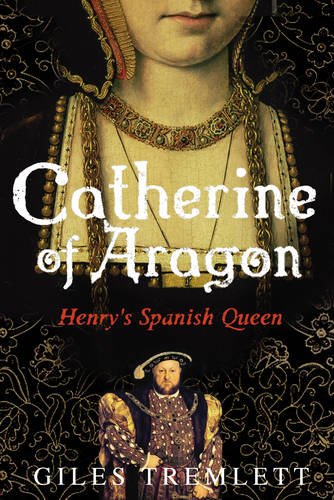
Catherine of Aragon (1485-1536), is a household name in England, as her marriage to Henry VIII was the first and the longest in a string of six tumultous marriages, but, the Spanish Infanta is, arguably, less known in Spain, as she failed to fulfil her royal duty bestowed upon her by her father, Ferdinand II of Aragon: to produce an uncontested heir to the English Crown that would embody a solid and lasting diplomatic alliance between the kingdoms of Spain and England in the early 16th century, when France emerged as a common rival.
Catherine's marriage to Henry lasted from 1509 to 1533, when the Archbishop of Canterbury, Thomas Crammer declared Henry's marriage to Catherine "null and void", which allowed Henry to marry young Anne Boleyn -with family ties to France, and undoubtedly contributed to the separation of the English Church from the Roman Catholic Church. Despite the terrible blow to her royal dignity, Catherine never gave up her claim and spent her entire life fighting hard for the right of their daughter, Mary, to be the legitimate heir to Henry's throne. Several authors have recently vindicated Catherine of Aragon as a well-educated and empowered woman, who led the country in military campaigns against the Scots (1513), while Henry was fighting in France, and who fostered bold social reforms in the English court: Catherine was a patron of Renaissance humanists like Erasmus of Rotterdam, Sir Thomas More and Juan Luis Vives, the Spanish scholar who wrote The Education of a Christian Woman, a treatise that "advocates education for all women regardless of social class and ability" -Catherine herself opened several colleges for women when she was Queen consort; she impressed Londoners with contemporary Spanish fashion and she also "started an extended programme for the relief of the poor", which made Catherine a very popular Queen consort in England and abroad, despite her estrangement from Henry.
But the interest in Catherine of Aragon has not waned over the years. Last week, the highly successful discussion programme In Our Time on BBC Radio 4, devoted a brand new episode to Catherine of Aragon: In Our Time, Feb. 2025 with host Melvyn Bragg and a panel of three top academics on Early Modern History: Lucy Wooding, from Oxford University, María Hayward, from the University of Southampton, and Gonzalo Velasco Berenguer, from the University of Bristol. This is a long radio programme (53') which contains very rich language without a script, so, it is recommended for C2 students and for Experts (Ex) or teachers who want to learn about Tudor England and Early Modern Spain. The list of salient words and collocations below can be used as a listening guide for lower level students.